
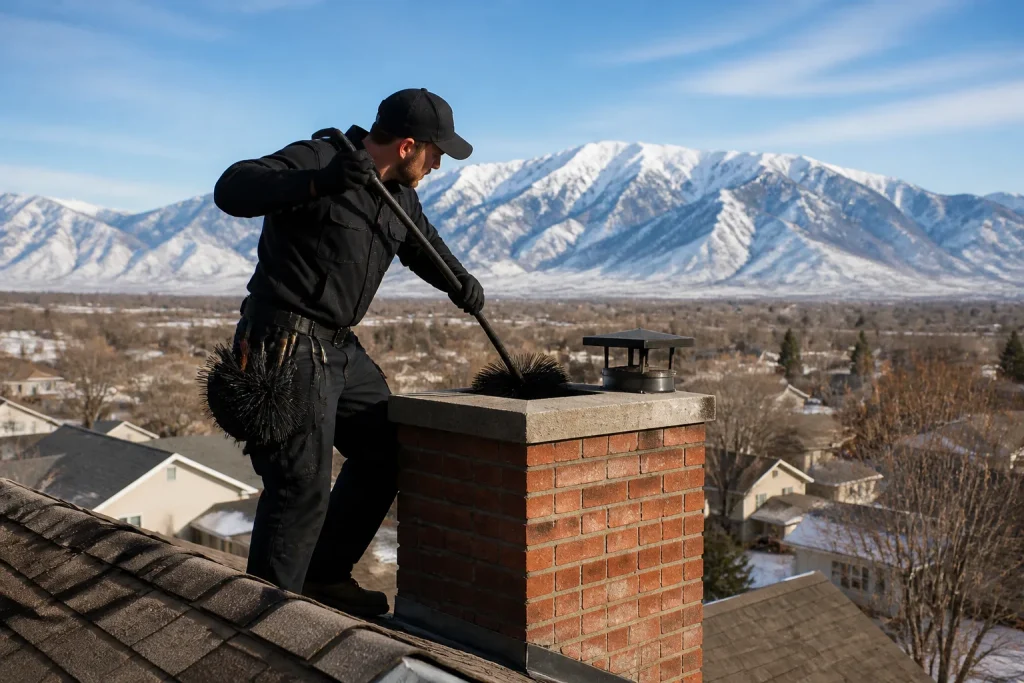
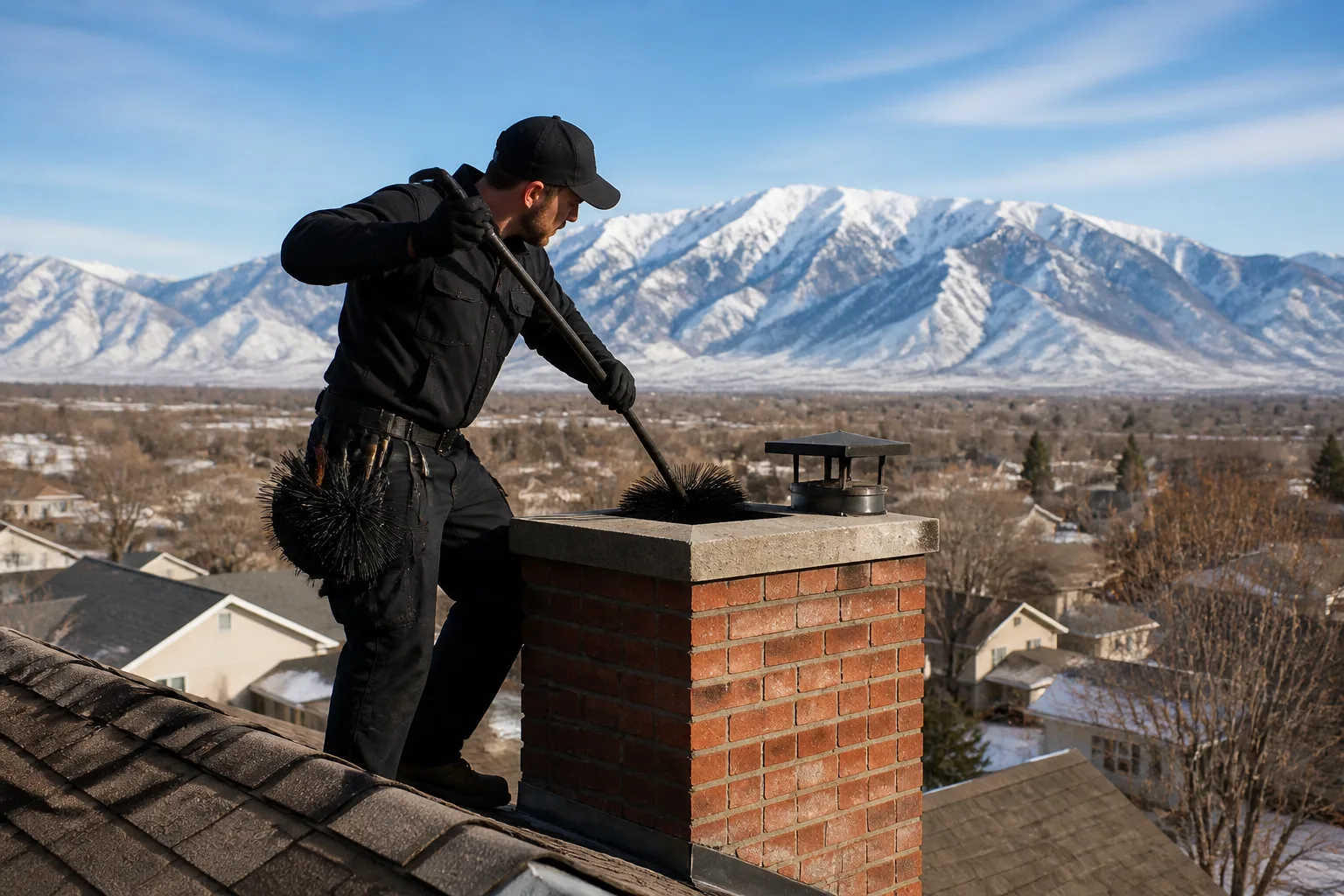
How to Choose the Right Chimney Cleaning Company in Draper
A five-star average tells you nothing about whether the technician who shows up understands the difference between Stage 2 and Stage 3 creosote, and that distinction decides whether your chimney is safe to light tonight. Choosing a chimney company in Draper comes down to verifying system-level knowledge, not counting reviews. Ask what they check, how they document it, and what they do when they find a problem. If you’d rather skip the research and talk to us directly, call (866) 947-8303.
Which Credentials Actually Matter for a Chimney Technician in Draper?
Two credentials matter most: CSIA certification and NFI certification. Each tests something different, and knowing what they cover tells you whether the person on your roof has real technical grounding or just a brush and a ladder.
- CSIA (Chimney Safety Institute of America) certification tests chimney system knowledge: how flues vent, how creosote forms and behaves at each stage, how to inspect liners and identify deterioration, and the code standards that govern clearances and venting. A CSIA-certified sweep has passed an exam on the mechanics of the whole system, not just sweeping technique.
- NFI (National Fireplace Institute) certification focuses on hearth appliances, gas and wood. It covers how fireplaces and stoves are installed and vented, combustion air, and what makes an installation safe. If your home has a gas fireplace or a wood insert, NFI knowledge matters because the appliance itself is part of the system.
Ask for the certification name, not just “certified.” A company that can name the body and explain what the exam covers is telling you something. In our experience, the technicians who can walk you through the difference between a Level 1, Level 2, and Level 3 inspection without hesitation are the ones who’ll catch a cracked liner crown before it becomes a water problem. The technicians we connect you with have up to 11 years of experience, and that bench depth shows in how they answer diagnostic questions.
Certification isn’t the whole story, but it’s the floor. A sweep without it may still do careful work. You just have no independent way to verify the training behind the brush.
Five Questions to Ask Before You Book a Chimney Sweep in Draper
These five questions separate a technician who understands chimney systems from one who runs a brush and leaves. Ask them on the phone before booking. The answers tell you more than any review page.
- “Will you do a camera inspection of the flue, and will I see the footage?” A camera reveals what a brush cannot: gaps in the liner, offset flues, cracked mortar joints, and the condition of the smoke chamber. A company without a camera is guessing about your liner. Ask to see the images.
- “What stage of creosote is in my flue, and what’s the treatment for it?” Stage 1 is light soot you can brush away. Stage 2 is hardened, glazed, and needs more than a brush pass. Stage 3 is a thick, tar-like coating that can ignite and often needs chemical treatment or liner work. A technician who can’t name the stage hasn’t assessed the fire risk.
- “Do you check the crown and cap, or just the flue?” The crown and cap are the two components most responsible for keeping water out of your chimney. A sweep who only cleans the flue misses the cracks and gaps that let water in and lead to structural damage. Ask specifically.
- “What does your written report include?” You want photos, a description of what was found, and a clear statement of what’s safe to leave alone versus what needs attention. A verbal “looks good” isn’t a report.
- “If you find a problem, can you fix it, or do I need another contractor?” A sweep-only company hands you a list and sends you shopping. A full-system company handles the liner, crown, cap, or fireplace repair without a second appointment and a second opinion.
Take notes on the call. A company that answers these clearly is likely to be the one you want on your roof in Draper.
Sweep-Only vs. Full-Lifecycle: Why It Changes What Gets Found
A sweep-only company cleans the flue and leaves. A full-lifecycle company inspects the entire system, which means it finds problems a surface cleaning can’t surface. The difference isn’t marketing. It’s diagnostic reach.
Your chimney is more than a tube. It’s a flue liner, a smoke chamber, a damper, a crown, a cap, and the masonry or framing around all of it. A sweep who cleans the flue may never look at the crown, where hairline cracks let in water that freezes and splits masonry. They may never check the cap, where a missing or damaged screen lets in rain, birds, and debris. They may never run a camera, so a cracked liner stays hidden until it’s a carbon monoxide risk.
Full-system service means those parts get checked in one visit and, when something’s wrong, handled by the same company. That’s why we work across five service categories: sweeping, inspection, fireplace repair, chimney repair, and cap and crown work. When a sweep turns up a damaged liner, we can move straight into liner work using HeatShield for resurfacing where the structure allows, or a DuraFlex flexible liner for offset and complex flue configurations that rigid systems can’t reach. We also install and work with Gelco, Olympia Chimney, Famco, and Copperfield. Professional-grade materials matter because a chimney repaired with the wrong components fails the same way twice.
In Draper, where dry summers and cold winters work on masonry year after year, the crown and cap take a beating. A full-lifecycle company notices that. A sweep-only company is already on the next job.
What a Legitimate Written Inspection Report Should Include
A real inspection report is a document you can read, keep, and act on. It’s not a verbal “you’re good” or a one-line checklist. Here’s what to expect from a report worth the paper it’s printed on.
- A stated inspection level. Level 1 for a routine annual check, Level 2 for a new home purchase, a change in appliance, or after an event like a chimney fire. The level tells you what was and wasn’t examined.
- Photos of the flue interior. Camera images are the evidence. If the report says the liner is in good condition, the photo should show it.
- Condition notes on the crown, cap, damper, smoke chamber, and firebox. Each component, noted separately, with condition described.
- A clear distinction between “monitor” and “repair now.” A good report tells you what can safely wait. Not everything needs fixing this week.
- Recommendations tied to what was found. Not a generic upsell menu. Lines that reference the specific photo or condition.
If you’re handed a vague checklist with everything marked “recommended,” ask which items are urgent and which can wait a season. Inspection first, recommendations second, is the order that keeps the advice honest. An inspection can also stand alone. You can book one without a cleaning, and get an honest read on your system without a cleaning being bundled in.
Red Flags to Watch for Before You Book in Draper
Some warning signs are obvious. Others are easy to miss if you’re not looking for them. These are the ones that should make you slow down.
- A quote given without an in-person inspection. Nobody can price liner work over the phone. A firm number before anyone has seen the flue is a guess dressed up as a quote.
- No camera for liner checks. If a company can’t show you the inside of your liner, they can’t tell you its condition. They’re guessing, and you’re paying for the guess.
- Pressure to decide on repairs the same day. A legitimate company gives you a written report and time to think. Urgency to sign today is a sales tactic, not a safety finding.
- No written report. A verbal “looks good, you’re all set” gives you nothing to compare next year. Ask for it in writing.
- Repair work that’s outside the scope of what they can name. If they can’t tell you which liner system or crown material they’ll use, ask why. We use professional-grade names like HeatShield, DuraFlex, and Gelco because they hold up and can be verified.
We’ve seen homeowners in Draper handed a same-day repair bill with no photos and no report. Slow down. A written estimate sets the price, and you should never feel rushed into signing one.
When to Call a Pro Instead of Waiting It Out
Some chimney problems announce themselves. Others stay quiet until they don’t. Call a professional when you notice any of these:
- Smoke backing into the room when you light a fire.
- A strong creosote or soot smell, especially on warm days.
- Visible cracks in the crown, cap damage, or missing cap screen.
- Water staining on the ceiling or chimney breast.
- It’s been more than a year since the last professional inspection.
You’ve just bought an older home in Draper and don’t know the chimney’s history. That’s a Level 2 inspection situation. High-tension springs, gas lines, and electrical work in a chimney system are not DIY territory, but a standard cleaning and inspection is a job for a trained professional with a camera and a report. If you’re not sure whether your situation needs attention, our chimney sweep service starts with inspection first. If you’d rather talk it through, we’re glad to help.
Related services in Draper: Chimney Sweep Draper for a baseline cleaning and inspection.
The Bottom Line
Choosing a chimney cleaning company in Draper comes down to verification. Ask about certifications and what they test. Ask five diagnostic questions and listen to the answers. Confirm there’s a camera and a written report. Watch for same-day pressure and phone quotes without a site visit. A company that covers the full lifecycle, from sweep to repair, will find problems a sweep-only company misses and fix them without a second contractor. If you’re in Draper and need help, Chimney Sweep Draper offers free estimates. Call (866) 947-8303. We answer 24/7. Fast dispatch from 7am to 7pm, Sunday through Friday.
Frequently Asked Questions
Most chimney sweeps in Draper fall in the range of $100 to $250 for a standard cleaning, and inspections and any repair work are priced separately by a written estimate. The written estimate sets the final price, and estimates are free. Call (866) 947-8303 for an exact quote.
Not always. A liner that’s cracked, deteriorated, or improperly sized may need relining, but the decision should come from camera evidence you can see. HeatShield resurfacing can extend the life of a damaged liner in some cases without a full reline, and DuraFlex flexible liners handle offset flues that rigid systems can’t reach. Nothing gets recommended without a camera inspection first. Call (866) 947-8303 for a free estimate.
Once a year for most wood-burning fireplaces, and more often if you burn heavily or notice creosote buildup. An annual inspection catches liner and crown problems before they become structural or safety issues. Call (866) 947-8303 to schedule.
Creosote builds up and can ignite, which is a chimney fire risk, and a cracked liner can let carbon monoxide into the home. Crown and cap damage lets water in, which leads to masonry rot over time. Skipping an annual inspection doesn’t cause a problem today, but it hides one until it’s expensive. Call (866) 947-8303 for a free estimate and an honest assessment of what can wait.
Written by the team at Chimney Sweep Draper.
Need Chimney Cleaning Help?
Call Chimney Sweep Draper - the local pro we connect you with is licensed and insured, here with fast help in Draper.
(866) 947-8303